
Summer Heat & HVAC: Your Roof's Hidden Risk
Blog post description.
7/24/20265 min read
How Summer Heat & HVAC Foot Traffic Threaten Commercial Roof Envelopes in the Southeast
Extreme heat, high thermal shock, and heavy summer rainfall across South Carolina, North Carolina, Georgia, and Tennessee create severe physical stress on commercial roof assemblies. However, the single most common cause of unexpected summer leaks isn't the weather—it is the surge in HVAC technician foot traffic servicing rooftop units under peak load. This guide outlines how commercial Property Managers can protect TPO, EPDM, Modified Bitumen, and Metal roofing systems, maintain tenant satisfaction, and enforce vendor accountability before micro-punctures become catastrophic interior leaks.
The Real Cost of Summer Roof Vulnerabilities: Protecting Tenant Relationships
When ambient summer temperatures in the Southeast hit 95°F, rooftop membrane and metal surface temperatures routinely soar past 150°F. When a sudden afternoon thunderstorm rolls through, that surface temperature drops 60 degrees in minutes.
While weather is a constant, the immediate operational risk to a Property Manager during summer is tenant disruption. Unaddressed summer leaks lead directly to:
Damaged Inventory & Lease Disputes: Water intrusion over retail sales floors, industrial warehousing, or office electronics creates immediate financial liability and rent abatement demands.
Erosion of Tenant Trust: Repeated emergency leak calls during storm cycles destroy tenant confidence and severely hurt renewal rates.
Preventable Emergency Call-Out Fees: Paying premium emergency dispatch rates eats away at operating margins far faster than structured preventative protocols.
Summer Vulnerabilities by Roofing System: Low-Slope vs. Commercial Metal
Different commercial roof structures react differently to Southeastern summer heat and service traffic:
Low-Slope Membranes (TPO, EPDM, Modified Bitumen)
Heat-Softened Membrane Punctures: High temperatures soften TPO and asphalt-based membranes. Service technicians walking off designated paths, dropping tools, or dragging sharp metal RTU access panels easily puncture the pliable membrane.
This recent forensic audit in South Carolina illustrates the exact danger of third-party negligence. In this instance (Figure 2, Left), our team identified what looked like a minor, superficial mark on a heavy-duty rubber walk pad. Upon deeper inspection, however, we discovered that a technician had dropped or dragged a sharp object with enough force to penetrate completely through the protective walk pad and puncture the primary TPO membrane (Figure 2, Right). A standard visual scan by an untrained eye would have missed this hidden catastrophic failure entirely
The Dangers of Hidden Deficiencies. A routine forensic audit in South Carolina identified a minor, red-circled defect mark on a heavy-duty TPO walk pad (TOP). Upon lifting the pad, Blue Ridge investigators discovered severe negligence: a sharp object had been forced completely through the walk pad and penetrated the primary TPO membrane (BOTTOM), bypassing the roof’s main line of defense.
This recent forensic audit in South Carolina illustrates the exact danger of third-party negligence. In this instance (Figure 1), our team identified what looked like a minor, superficial mark on a heavy-duty rubber walk pad. Upon deeper inspection, however, we discovered that a technician had dropped or dragged a sharp object with enough force to penetrate completely through the protective walk pad and puncture the primary TPO membrane, bypassing the roof’s main line of defense. A standard visual scan by an untrained eye would have missed this hidden catastrophic failure entirely.
Seam Separation & Thermal Contraction: Rapid cooling from afternoon rain bursts puts extreme tension on heat-welded TPO seams and EPDM lap sealants, pulling aged micro-gaps wide open.
Condensate Line Clogs: Rooftop HVAC units produce gallons of condensation daily. Unrouted or clogged drain lines pool water around RTU curbs, degrading adhesives and causing localized membrane blistering.
Commercial Metal Roof Systems (Standing Seam & Exposed Fastener)
Fastener Backout from Thermal Expansion: Metal panels expand and contract significantly more than single-ply membranes. This constant movement backs out exposed fasteners and degrades neoprene washers over time.
Panel Seam Slippage & Sealant Fatigue: Extreme thermal expansion puts immense pressure on panel lap sealant, allowing wind-driven summer rain bursts to push water upward into the building envelope.
Traffic Dents on Ribs: Service personnel stepping directly on metal panel ribs rather than structural purlins cause panel deformation, creating permanent standing water traps.
The Property Manager's Vendor Accountability SOP
To eliminate vendor-induced roof damage and maintain clean operational records, Property Management teams should enforce a three-tier protection protocol for all third-party HVAC and mechanical contractors:


Frequently Asked Questions (FAQ)
Why do commercial roof leaks spike during the summer in the Southeast?
Summer leak spikes are caused by a combination of extreme thermal expansion, sudden cold rain bursts (thermal shock), clogged HVAC condensate lines, and increased foot traffic from mechanical technicians servicing rooftop units under heavy cooling loads.
How does HVAC service foot traffic damage a commercial roof?
High summer temperatures soften TPO, EPDM, and asphalt membranes. When technicians step off designated paths, drop heavy tools, or leave sharp panel screws on the roof, foot traffic forces those objects directly through the heat-softened membrane, creating micro-punctures.
What should a property manager require from an HVAC contractor working on the roof?
At a minimum, require a mandatory photo roll documenting the condition of the roof pathway and RTU workspace before and after the service visit. This establishes clear accountability if punctures or damage occur during the repair.
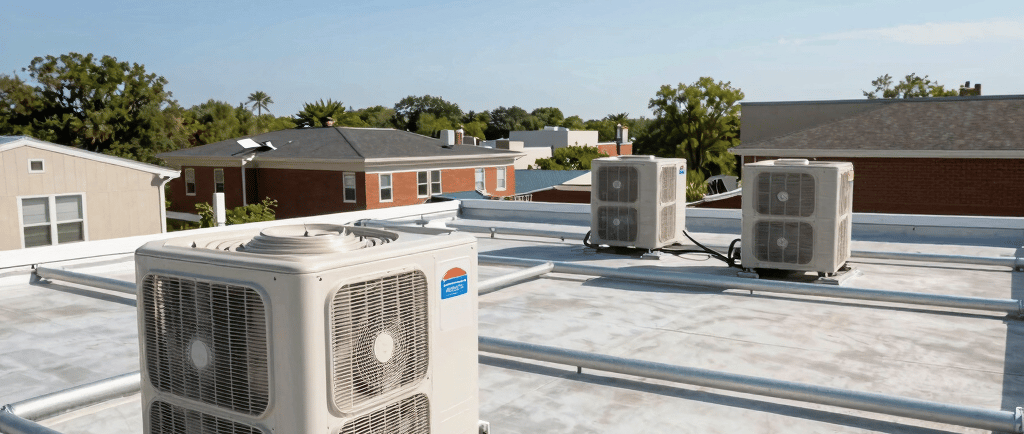
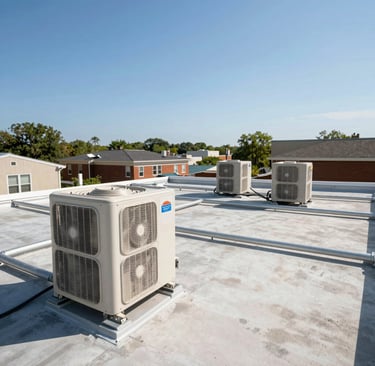
A forensic view of a standard TPO roof envelope with installed rubber walk pads surrounding a central Rooftop Unit (RTU). Establishing clean, designated pathways is the first step in commercial asset protection.
"Over 40% of the summer leak calls we respond to across commercial portfolios in South Carolina, Georgia, and Tennessee stem directly from mechanical service contractors puncturing heat-softened membranes or stepping off structural purlins on metal roofs while servicing RTUs."
— Blue Ridge Roofing Asset Protection Team
Tier 1: The Zero-Cost Mandatory HVAC Photo Roll
Require all mechanical contractors to submit a Mandatory Pre- and Post-Service Photo Roll before invoice approval.
Photo 1: Roof access point and path taken.
Photo 2: The condition of the membrane/metal around the RTU before work begins.
Photo 3: The work area after completion, proving all panel screws, sharp metal trimmings, and tools were removed.
Tier 2: Post-Service Envelope Audits
For major mechanical overhauls or unit replacements, schedule a dedicated, post-service envelope audit with a commercial roofing partner. Having a certified roofer inspect the perimeter immediately after heavy trade work ensures any accidental punctures are identified and patched before the next storm cycle.
Tier 3: Walk-Pad Capital Planning
If your facility lacks designated walkway pads from roof access hatches to primary RTUs, map these out as mandatory line items for your upcoming budget cycle or roof replacement scope. Heavy-duty rubber walk-pads preserve the primary membrane under high-traffic routes.


Need a forensic envelope audit for your commercial properties in SC, NC, GA, or TN?
Reliable roofing and maintenance when you need it.
© 2026. All rights reserved. | Privacy Policy | SMS Terms